If the DFL Wants To Impress, Leave Early

The new DFL majority in the Minnesota State Legislature is anxious to prove to voters that it is better equipped to lead than the previous Republican majority.  The DFL agenda has essentially been the polar opposite of the Republican agenda.  Whatever Republicans did, DFLers are undoing.  Republicans used Minnesota schools as their personal ATM to “balance” their budget.  DFLers are rushing to pay school kids back. Republicans used budget gimmicks instead of fixing the long-term structural deficit.  DFLers are increasing taxes and cutting spending to close the long-term structural deficit. Republicans tried to restrict the freedom to marry.  DFLers are expanding it.

Those are all good and important changes.  But of all the things that DFLers could do to impress Minnesota the swing voters who will determine in 2014 which party remains in control of the Legislature, I submit that the most memorable and impressive achievement would be to adjourn early.

I’m serious.  Declare victory and vamoose early.  Voters would adore legislators for it.

While  complex policymaking is sometimes difficult for voters with busy lives to appreciate, all voters appreciate the keeping of deadlines. We had deadlines in school.  We have them at work.  We have them for our taxes and fees.  Our spouses give us deadlines.  We have them for our household bills.   Every Minnesotans has to relentlessly meet deadlines throughout our lifetime, or we will face serious punishment.  Like it or not, deadlines shackle our lives.

Regular citizens appreciate deadline-making at a gut level.  For this reason, it makes us absolutely bananas when the Legislature regularly and cavalierly blows deadlines.  At school meetings, church gatherings, youth sporting events and backyard barbeques, I hear more complaints about this legislative habit than any other substantive issue.  Missed deadlines, or even nearly missed deadlines, make incumbents look like irresponsible and incompetent children.

I understand why pushing policymaking decisions to the last moment or beyond can be an advantageous move for a legislative strategist.  They employ brinksmanship to achieve their policy goals.  “Nothing focuses the mind like a deadline,” the saying goes.

This makes perfect sense inside the walls of the State Capitol, but leaders need to understand the optics outside the walls of the Capitol.  Voters get punished for missing deadlines, so they have a visceral feeling that legislators should as well.

Imagine how surprised and delighted Minnesotans would be to awake next weekend to news headlines like this:

“Legislature Surprisingly Finishes Work A Day Early.”

This news would be a stunner, one of those unlikely “man bites dog” type stories that voters never see.   Such a headline would disarm the perennial political challenger critique: “Legislators spent all their time on X, which prevented them from getting their  work done on time.”  It would send a signal that the grown-ups had arrived in Saint Paul at long last.

With the news this weekend that legislative leaders have reached agreement about the broad outlines of the fiscal end-game, finishing on time might seem more feasible than usual.  Still, legislative leaders are refusing to let go of pet initiatives that fall outside the agreement, so it still seems likely that negotiations will go right up to the deadline abyss.  Legislators probably will finish on-time, but just barely.  Just as they do nearly every year, they will look like children turning in half-assed assignments at the very last minute, and swing voters’ eyes will collectively roll.

If DFL legislators want to survive difficult mid-term elections in 2014, they should heed the sage advice of Rock and Roll Hall of Famer Bobby Womack about when to exit the stage:  “Leave them wanting more and you know they’ll call you back.”

- Loveland

The Real Heroes Of The Gay Marriage Debate

As the Minnesota House debates legislation to extend the freedom to marry to gay people, I’ve been reflecting on my own journey on this issue.  I suspect I’m not alone.

My first exposure to homosexuality was being called a “fag,” “queer,” “homo” or “mo” on the playground of my Catholic elementary school.  Before I alarm people, this isn’t a confession, at least not the kind you may be thinking.

I was never accused of having romantic or sexual interests in boys.  In the 1970s, those epithets were liberally used by boys on the playground to describe general displeasure for wide variety of sins, such as when a classmate had poor performance in kickball.   In the language of the playground, those slurs, in that place in time, translated roughly to “you suck,” in the non-sexual sense.

At that tender age, there was nothing sexual about the anti-gay slurs. But there was nothing positive about them either.  The lesson we were teaching each other, and passing on down the grades, was clear:  Being called a homo was an insult, so being a homo obviously must be a really horrific thing.

I can’t begin to imagine how hearing that barrage of slurs must have felt to gay kids, and how many young straight minds it warped, like mine.

Out of Sight, Out of Mind

 Through my childhood, I honestly never really thought that gay people existed in my home state of South Dakota.  I’m not joking or exaggerating.  I literally thought gay and lesbian people only existed in a few isolated parts of the world.  Maybe those people were in Paris and San Francisco, but not in the “normal” parts of America, and certainly not in my circle of family, friends and neighbors.  For that reason, I was indifferent about how gay people were being mistreated.

This wasn’t as parochial and mean as it sounds now.   Gay people in my life weren’t coming out of the closet, and I was neither a mind reader nor socialized in a way that would give me even a rudimentary “gaydar.”  So, out of sight, out of mind.

The Power of Personal Connection

That mindset slowly began to change when two astoundingly courageous guys in my hometown went to the senior prom in 1979.  This was big national news, a highly unlikely first to come out of a place like Sioux Falls, South Dakota.  I don’t remember making cruel jokes about it, but I’m quite sure I did.  I didn’t hate the brave gay couple.  But I certainly didn’t stick up for them either.

But this teen couple’s coming out did slowly start to shift my thinking.   I remember thinking:  “Could there be a few more gay people in South Dakota that I don’t know about?”

Not too long after that in a college psychology class, I read that as many as 10% of humans were homosexual.  The fact that it might even be half true rocked my worldview a bit.  But even knowing that, as incredible as it seems now, it still never really dawned on me that there were gay people in my midst.

When I moved to Washington, DC after college, gay culture was more prominent.  There was a neighborhood that straight people made snarky jokes about. There was the AIDS crisis, which struck me as horrible, but in an impersonal way.  Again, no one in my immediate circle of friends was saying they were gay, so I didn’t get too concerned about issues impacting “those people.”

Until I had a close friend who was gay, I didn’t once stick up for gay people.  I’d like to come up with even one heroic story for you, but I have none.  The golden rule was sitting right there to guide me, but I ignored it.

But again, part of the reason I couldn’t get sufficiently motivated about the injustice all around me was that the issue wasn’t close and personal to me. When that changed, I changed.  When some of my favorite people had the courage to tell me and the rest of the world that they were gay, I suddenly cared a lot about how American society was treating gay people.

Quite suddenly, it was no longer about gay rights.  It was about friends’ rights, co-workers’ rights, parents’ rights, and relatives’ rights.  Then, after a little flirtation with the notion of civil unions, it all became very clear what needed to happen.  My friends, co-workers, and relatives obviously needed to be treated equally and fairly.

The important point here is that I didn’t change myself.  My gay friends’ courage changed me.

The Real Heroes of the Marriage Movement

As the freedom to marry legislation is debated at the State Legislature this week, a lot of straight people will be congratulating ourselves about how righteous and courageous we are for fighting for LGBT freedom and equality.

We need to get over ourselves.   Heterosexuals clearly wouldn’t be where we are today if gay people hadn’t had the unfathomable courage to stand up and tell a hostile world who they were.  Straight people like me failed the courage test for decades, and it took dauntless gay people to finally get us to change.

Straight leaders, activists and constiuents are playing a role in the history being made at the State Capitol this month.  Good for us.  Finally.  Good for us.

But let’s be honest with ourselves, heterosexuals.  We are playing a small supporting role in this freedom to marry movement.  The real heros are not the heteros.  The real heros are the people who had the courage to speak truth to power when it was difficult and dangerous:  “We’re here, we’re queer, get over it.”  That, much more than straight people’s belated courage, is at the core of what is changing America.

- Loveland


Note:  This post was also featured as a “best of the best” in MinnPost’s Blog Cabin.

Fighting Terrorism With A Stiff Upper Lip

Days after the bombings at the Boston Marathon finish line, Facebook, Twitter and the news media are still awash in borderline hysterical outcries.  I understand the sentiment.  The video of the acts is seared into our memories, and we feel the need to show support for our Bostonian neighbors.  Those are good and natural instincts.

Still, some of it gets a little maudlin and over-the-top.  It’s worth noting that the ultimate point of terrorism isn’t actually killing.  It is terror.  Terrorists want their killing and maiming to get blown out of proportion by the news media and our leaders, so that it dominates our psyches and disrupts our freedom and pursuit of happiness.

In other words, the only thing terrorists have to fear is the inability to promote fear itself.

Which is why I pose this question:  Should Americans be afraid about what happened in Boston?  We definitely should feel outrage, compassion and commitment to prevent future attacks.  But fear?  Terror?

Is Fear Of Terrorism Rational?

The Reason Foundation did an interesting analysis about the odds of suffering various calamities, which helps us understand what is most logical for us to fear.

  • Chances of dying in a car accident:  1 in 19,000.
  • Chances of drowning in a bathtub:  1 in 800,000.
  • Chances of dying in a fire:  1 in 99,000.
  • Chances of being struck by lightning: 1 in 5,500,000.
  • Chances of being killed by a terrorist:  1 in 20,000,000.

I don’t know anyone who is enjoying life less because of their consuming fear of getting hit by lightning.   But many Americans are enjoying life less because of their consuming fear about terrorism, something that is four times less likely to happen than a lightning strike.  With them, the terrorists are winning, because they are giving terror way too much cognitive real estate.

According to researchers at Ohio State University and the University of Newcastle (Australia), we’ve spent well over a TRILLION dollars trying to prevent terrorists attacks since 2001.  We’ve stopped a lot of attacks, but even that Herculean effort can’t stop them all.  So that leaves us to ponder, how do we react when terrorist acts still happen?

Is Fear of Terrorism Helpful?

President George W. Bush was criticized for counseling Americans to go shopping after the 9-11 attacks.  Though President Bush never actually said those precise words, I frankly would endorse anyone who counsels us to get on with our lives in the wake of terrorist attacks.  Just as the British propaganda campaign urged British citizens to “Keep Calm and Carry On” during massive Nazi air attacks on their homes, I wish our leaders would do more to quiet citizens’ irrational levels of fear.

“Go shopping,” if Bush had actually said that, would have been a little too trivial a rallying cry.  But “go on living and loving” is sound advice. It’s a cliche, but life truly is way too short to spend it consumed by fear. We need to support our neighbors in Boston who are hurting, but we also need to keep it all in the proper perspective and move on with our lives.

Standing on the rubble pile in the wake of the horrific 9-11 attacks in New York City, President Bush famously cried into his bullhorn:

“I can hear you.  The American people can hear you.  And the people who knocked these buildings down will hear all of us soon.”

That little bit of sabre rattling was cathartic for a mourning nation, and great political theater.  But for the deranged terrorist who packed those pressure cookers with nails and ball bearings, I have a feeling that the reaction that would be most discouraging is not cries of retribution, but the murmur of a courageous nation being calm, and carrying on.

- Loveland

Who is the MN GOP Representing on Gun Background Checks?

In politics, presidential candidates who win the support of over 60% of Americans are said to have won overwhelming “landslide” victories.  Harding’s 60.3% in 1920. FDR’s 60.8% in 1936. Johnson’s 61.1% in 1964. and Nixon’s 60.7% in 1972.  Landslides!

It is so difficult to get 60% of Americans to agree on politics, that such “landslide victories” are considered highly unusual indications of a historically overwhelming level of public sentiment.

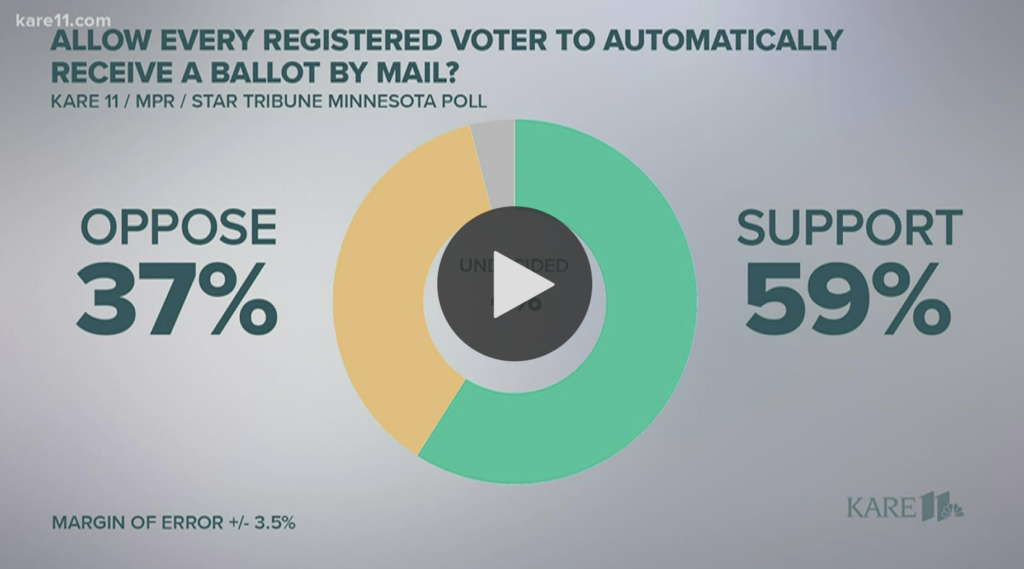
In Minnesota right now, Minnesotans of all walks of life, including Republicans, Independents, gun owners and Greater Minnesota citizens, are giving a landslide victory to gun background checks:

The Minnesota Republicans’ point person on this issue, State Representative Tony Cornish (R-Vernon Center) shrugs off this Star Tribune Minnesota Poll with a cavalier “nobody really believes those polls.”

  • Or this poll — CNN/ORC (89% support background checks)?
  • Or this poll — Quinnipiac (91% support background checks)?
  • Or this poll — Morning Joe/Marist (87% support background checks)?
  • Or this poll — CBS (90% support background checks)?
  • Or this poll — Fox News (85% support background checks)?
  • Or this poll — ABC/Washington Post (90% support support background checks)?
  • Or this poll — Pew/USA Today (83% support background checks)?
  • Or this poll — University of Connecticut (69% support background checks)?
  • Or this poll — Gallup (91% support background checks)?
  • Or this poll — Associated Press-GfK (84% support background checks)?

For those who quibble about question wording, these polls all asked the question a bit differently.

For those who argue methodology, these polls all reached a different randomized sample of respondents, and relied on different methodologies.

For those who worry about sponsorship bias, these polls were sponsored by a wide variety of news outlets and academic institutions.

For those who stress that polls are blunt instruments, these polls did not find slim margins that conceivably could be slightly off.  They found support levels that are between 10 and 30 points higher than “landslide” threshold of support.

Make no mistake, on the issue of universal gun background checks, Minnesota Republicans are choosing to represent the will of NRA lobbyists over the will of the overwhelming majority of Minnesotans, including gun owners, Republicans, Independents and Greater Minnesota citizens.

Frankly, Minnesotans, Republicans just aren’t just not that into you.

Note:  This post was also featured in Politics in Minnesota’s Best of the Blogs.

Bachmann Accuser: Congresswoman “Hijacked by Mercenaries”

The following was submitted to Wry Wing Politics via an April 6, 2013 email written by Peter E. Waldron, the former National Faith Outreach Director for the 2012 Michele Bachmann for President campaign organization.  Dr. Waldron’s post-election allegations that Bachmann violated election finance laws are currently being investigated by the Office of Congressional Ethics (OCE) in Washington, DC.  He also says that Bachmann has asked him to sign a confidentiality agreement that he says would bar him from discussing the Bachmann campaign’s “unethical, illegal, or immoral activity.”

Dr. Waldron, who has an interesting personal history, was responding to a January 16, 2013 Wry Wing Politics post.

Your January 16, 2013 analysis  of the Bachmann Campaign troubles  (The Battle of the Bachmanniacs: Mercenaries versus Missionaries) is fair.  Another difference, I respectfully submit, is that the “missionary” represents a large constituency.  For example, I carry into every campaign a responsibility to present the candidate in good faith to each pastor, priest, and values-based voter that I either enlist for an endorsement or recruit to vote for our candidate.

On the other hand, I tender with respect that a “Mercenary” is in it for himself/herself and believes that the end justifies the means without regard for the local people, reputations of endorsers, or good name of volunteers and supporters.  Victims are scattered across the landscape of early primary and caucus states like Iowa, New Hampshire, and South Carolina.

The democratic process in our nation is broke because “mercenaries” are too often in control of campaigns and candidates.  It must change.

Permit me, please, to borrow your language for a moment, I allege that the Bachmann campaign was hijacked by “Mercenaries” after the Straw Poll on August 13, 2011 until now.  The “Mercenaries”, I allege, removed as much money as possible from the campaign and in the end, I allege, sought refuge behind the Congresswoman’s position as a Member of Congress.

I believe that the results of the Heki v Bachmann lawsuit and four investigations into Rep. Bachmann’s senior campaign advisors will bear me out.

Blessings, Peter Waldron

The following is the original Wry Wing Politics post that Dr. Waldron references:

The Battle of the Bachmanniacs: Mercenaries versus Missionaries

Posted on

The Star Tribune’s Kevin Diaz is covering an interesting story about an ugly battle happening inside Congresswoman Michele Bachmann’s 2012 presidential campaign circles.  The coverage details allegations made by an evangelical leader named Peter Waldron who worked as a national field coordinator for the Bachmann-for-President staff.

Mr. Waldron is accusing Bachmann of several things, including complex and serious violations of Federal Election Commission (FEC) spending laws.  But at the visceral core of Waldron’s allegations, he is also blowing the whistle on the fact that Bachmann refused to pay Waldron and his campaign allies, at the same time she was paying a lot of money to a political consultant, Guy Short, and an Iowa Republican party official, Kent Sorenson.  This as much about the IOU as the FEC.

This skirmish shines a spotlight on a type of tension that is very common with just about all modern political campaign staffs.  The campaign staff battle lines fall out this way:

  • MISSIONARIES.  Some campaign staffers are missionaries.  They are zealous believers in a particular ideology and/or theology.  Missionaries are motivated by policy purity.  They want to convert others to their way of thinking, at any cost. Mr. Waldron seems to have been a leader of the missionary camp on the Bachmann campaign.
  • MERCENARIES.  Then there are the mercenaries.  These are the professional political soldiers who are paid handsomely to swoop in to do battle for the candidate during the campaign.  Mercenaries are motivated by the profit motive and winning, because winning leads to jobs and future profit-making opportunities.  The hired guns are working to win the election, at any cost. Mr. Short seems to have been in the mercenary camp of the Bachmann campaign. Continue reading

The Real Problem With Vikings Stadium Financing

Albert Einstein said “anyone who has never made a mistake has never tried anything new.”  In the wake of reports that new e-gambling revenue is proving to be insufficient to fund the new Vikings stadium, Governor Mark Dayton and other stadium proponents recently have been heard mumbling similar sentiments.

With any mistake, and this one was a doozy, the important thing is to learn the correct lesson to carry into the future.  This is how that debate currently is playing out in Minnesota:

 What is the lesson(s) State leaders should learn from this revenue shortfall episode?

A. Never rely on private sector vendor input for fiscal note estimates.
B.  Never rely on huckster billionaire owner-endorsed revenue sources.
C.  Never believe anything that any lying stadium supporter says.
D.  Be patient, the revenue will be there eventually.

Over the last few weeks, all of these answers have been aggressively pushed in the news media, legislative arena and blogosphere.   Stadium opponents tend to go with one or more of the first three answers, while stadium supporters mostly go with answer D.

As Minnesotans try to identify the correct lesson to guide future decisionmaking, I’d argue for the addition of another option:

E.  If you really need a definite amount of revenue right away, don’t choose a never-before used revenue source.

Let’s be honest:  There is a very good reason why the e-gambling vendor, the Wilfs, the Governor and legislative stadium supporters were all fantastically wrong about the amount of revenue e-gambling could raise in the short-run:  There was no consumer demand history to guide estimates.  Zero. Zilch. Nada.

Nobody could possibly know if these games would be a boom or a bust, because the games had never been put in front of consumbers elsewhere.  They didn’t even exist yet.

Because of that lack of consumer demand history, the fiscal note for the Vikings Stadium bill was not an estimate.  Estimates are based on real world data and observations.  The fiscal note was not even a hybrid “guesstimate.”  It was, out of necessity, a flat-out guess.

Now, you may believe that the guessing that happened during the 2012 legislative session was ignorant, misleading, naïve, or utopian.  But the core problem here is that leaders never should have chosen a revenue source that necessitated 100% data-free guesswork.

If we learn that lesson from this historical episode, we will be a wiser people than if we delude ourselves that this was all some vast Wilf/Dayton/vendor/Legislature conspiracy.

I love a good conspiracy theory as much as the next guy.  But in this case, the conspiracy theories make absolutely no sense.  After all, why would Wilf, Dayton and a bipartisan group of legislators intentionally choose a revenue source that they knew would be inadequate to pay for something that they really, really wanted to build as soon as possible?  Why would they intentionally do something that they knew would force them to return, hat in hand, to a legislative arena that has proven for over a decade to be a hell-scape for stadium supporters?

No, there was no conspiracy here.  The foundational problem was that leaders picked a revenue tool that was a) voluntary and b) had no track record, and these two things made a reliable fiscal note impossible, for a project where we really needed a reliable fiscal note.

That is the genesis of this mess, not conspiratorial leaders.

- Loveland

Note:  This post was  featured in Politics in Minnesota’s Best of the Blogs.

Why Wealthy Minnesotans Can Pay More

Taxing millionaires.  Surcharging millionaires.  Raising the minimum wage.

For the casual observer who hasn’t done their homework, I can see how this might be confused with “class warfare” waged by mean DFLers intent on punishing rich people.

But here’s the thing about warfare.  You can’t take a quick glance at a battlefield and identify the aggressors.  For instance, an observer flying over Normandy Beach on June 6, 1944 couldn’t reasonably conclude “those mean Americans storming that beach down there are obviously wreckless war mongers.”

After all, what about the blitzkreig and Pearl Harbor, right?  You have to know at least a bit about the prelude to an event to be able to make informed conclusions about the event.

So it goes with the  “class warfare” charges flying around the 2013 Minnesota Legislature.   Observers who say the DFL has launched an all-out “class war” against wealthy Minnesotans need to look at the prelude to the policy.

Context

As the following chart shows, in recent years the wealthiest Minnesotans have been doing very well, thank you very much.  At the same time, poor and middle-income Minnesotans have been doing relatively poorly.

“The rich are getting richer, and the poor are getting poorer” isn’t just a cheap slogan.  In Minnesota right now, it’s the demonstrable truth.

As billionaire Warren Buffet put it:

“There’s class warfare, all right, but it’s my class, the rich class, that’s making war, and we’re winning.”

That little piece of historical context explains why wealthy Minnesotans are being asked by DFL legislators to do the most to address Minnesota’s structural deficit problem. Wealthy people are being asked to pay more, because they have by far the most capacity to do more.  This terrific infographic video explains the breathtaking degree of concentration of wealth in America:

This is important context for understanding the DFL proposals to increase taxes on the rich and raise the minimum wage, just as the blitzkrieg is important context for understanding the storming of Normandy.

Perspective

Along with reporting the context, we also have to keep the proper perspective about what the DFL’s proposals would, and would not, do.

Despite the hyperventilation on the right, nobody is proposing communist-style income equality.  Not even close.  The DFL legislators are talking about a very modest  adjustment for the wealthiest Minnesotans, an adjustment that will still leave them, far-and-away, the wealthiest Minnesotans.

To summarize, if there is a class war going on, poor- and middle-income families didn’t start it.  But I reject the assertion that there is a “war” of any type going on.  What the DFL proposes is a modest adjustment to a system that has gotten badly out-of-whack.

That’s not war.  That’s wisdom.

- Loveland

Note:  This post was also featured in Politics in Minnesota’s Best of the Blogs.

“Democrat Party:” The GOP’s Childish Name Game

We all remember those times on the playground when kids’ names would be twisted into teasing word play.  Private parts and mental health were common themes, as I recall.  Woe be unto the unfortunate child born with a name like “Seymour Butz.”

During childhood, the motives behind the name-oriented word play varied from benign to bullying.  But whatever the motive, it was rarely welcomed by the recipient, and was, above all else, childish.

So surely adults have left all that infantile behavior behind, right?

Well, take a look at recent blog posts on leading Minnesota conservative blog aggregator “True North:”

  • Bill Blahn refers to “the new Democrat majority.”
  • Matt Abe complains about “constant attacks from the Democrat Party.”
  • Nancy LaRoche speaks of “hypocrisy in the Democrat party.”
  • Mitch Berg suggests :  “the best thing the Democrat Party can do is bar its members from being on Twitter unless they pass an intelligence and literacy test.”
  • Jeff Kolb writes of “contemporaries in the Democrat Party.”
  • Former GOP gubernatorial nominee Tom Emmer and Bob Davis refer to “the leadership of the Democrat party.”

Notice a trend?  You’ll find the same trend coming from conservative talk radio guru Rush Limbaugh, former Minnesota GOP Chair Tony Sutton, GOP House Speaker John Boehner and other issuers of Republican talking points.

This practiced use of the epithet “Democrat Party” isn’t correct, and it usually isn’t a mistake.  Instead, this is a remarkably jejune name game that adult Republicans have been playing for decades.   Type the words “Democrat Party” into Google, and you will get 3.4 million hits to peruse, and many of them are Republicans intentionally misusing the name of the “DemocratIC Party.”

The motive behind this language misuse?  It is no different from the motive of the name-oriented word play on the playground, and it is no less childish.

I’ll leave it to grammarians and editors to debate whether, in this particular usage, the D-word in front of “Party” should be a noun or an adjective.  I’m not the least bit interested in that debate, because the only thing that really matters is what the owners of the name prefer to call themselves.  The members of the Democratic Party have made it abundantly clear that they chooses to call themselves the Democratic Party, so that is what mature adults should call them.  (See Golden Rule.)

Think I’m overreacting ?  What would Minnesotans think if Governor Dayton started calling the Republican Party the “Republic Party,” long after Republicans had repeatedly pointed out the actual name of their party?  What if President Obama referred to the “Republic Party” in a solemn State of the Union Address, as George W. Bush did when he said “Democrat Party” in his 2007 address?  Wouldn’t that seem more than a little puerile?

At a time when the national Republicans are taking stock of the things that are sullying their “brand” with moderate voters who are tired of infantile political game-playing, I’d suggest they do some soul-searching about this silly little party custom.

There are a lot of things that are curious about this “Democrat Party” usage, not the least of which is that it’s not a particularly clever insult.  In fact, I have never been entirely sure what was even meant by it.  Perhaps Republicans wish to point out that the Democratic Party is not the embodiment of “democracy,” because “democracy” is a popular notion?

New Yorker commentator Hendrik Hertzberg observed “There’s no great mystery about the motives behind this deliberate misnaming. ‘Democrat Party’ is a slur, or intended to be—a handy way to express contempt. Aesthetic judgments are subjective, of course, but ‘Democrat Party’ is jarring verging on ugly. It fairly screams ‘rat.’”

At the end of the day, I don’t even think a lot of Republicans know why they are habitually dropping the “-ic,” other than they know that it annoys their foes.  In other words, the dropping of the “ic” is motivated by the same thing that motivated the name game insults when we were churlish children on the playground.

Ick indeed.

- Loveland

Note:  This post was also featured as a “best of the best” in MinnPost’s Blog Cabin.


Norm Coleman To Return To His DFL Roots?

Former St. Paul Mayor and U.S. Senator Norm Coleman is nothing if not flexible.

  • When  leftist radicals were de rigueur in the 1960s, Norm 1.0 was a leftist radical.
  • When Skip Humphrey and Bill Clinton were on top of the political world, Norm 2.0 clung to them and the rest of the Democratic establishment.
  • When the easier path to higher office appeared to be through the GOP, Coleman retrofitted into GOP Norm 3.0.
  • When the Tea Partiers became power brokers, Norm 3.0 dutifully donned a tri-corner hat, formed a Super PAC to fund Tea Party-backed candidates, and endorsed Tea Party darling Michele Bachmann for, I kid you not, Vice President.

Then in 2012,  the going got tough for Senator Coleman and Tea Partiers, so the tough got a poll. In a St. Paul Pioneer Press commentary this week, Coleman advises Minnesotans  that he is in possession of scientific evidence indicating that “Minnesotans are not anti-government.”

New Norm

Accordingly, Senator Coleman is now telling his fellow Republicans that they should be more like him, Norm 2.5, center-right Norm.  Specifically,  Coleman’s commentary calls for his conservative followers to adopt a brand of conservatism that is “intent on improving the efficiency and effectiveness of government,” while “ensuring that those who most need help in our society are able to have the support they need.”

This evolution is welcome news.  In the past Senator Coleman and his party often chose to perform his government repairs with a wrecking ball rather than WD-40.  For instance, in a 2005 vote Senator Coleman, according to www.ontheissues.com, voted to “reduce federal spending by $40 billion over five years by decreasing the amount of funds spent on Medicaid, Medicare, agriculture, employee pensions, conservation, and student loans.”

“It’s time to listen to what Minnesotans want”

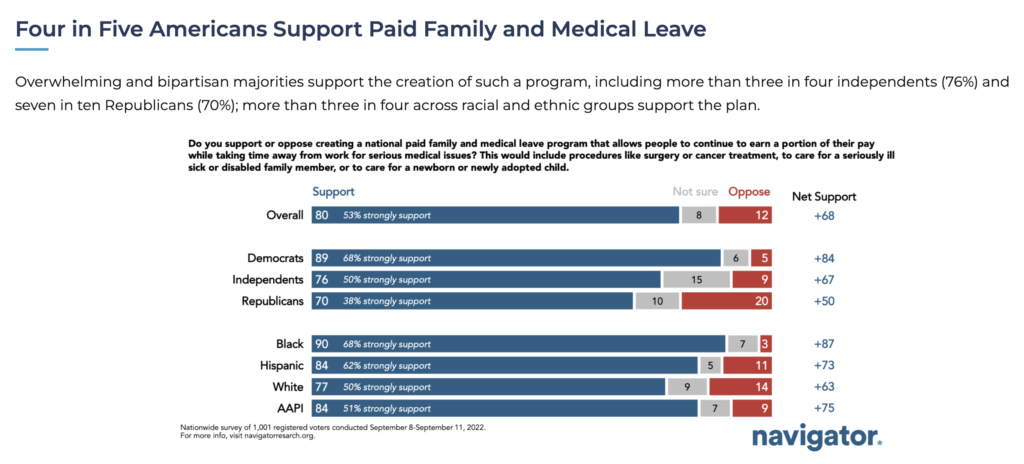
But now Coleman’s commentary tells his followers that “it’s time for conservatives to listen to what Minnesotans want.”  Recent public opinion surveys tell us in no uncertain terms “what Minnesotans want:”

(Incidentally,  opinions’ on guns, marriage equality, voting restrictions, abortion, stem cell research and other social issues also are leaning decidedly left these days, but Coleman wants conservatives to de-emphasize social issues, so we will ignore “what Minnesotans want” on social issues for the purposes of this discussion.)

In other words, “listening to what Minnesotans want” leads Senator Coleman, after all these years in the political wilderness, back to the Democratic Party agenda.

Welcome home, Senator Coleman.  Welcome home.

- Loveland

Note:  This post was also featured in Politics in Minnesota’s Best of the Blogs and MinnPost’s Blog Cabin.

Norm Who?

Not so long ago, one Norman Bertram Coleman was, well, kind of a big deal.  You may remember him:

  • From 1994-2002, he was a GOP mayor of Minnesota’s second largest city, a DFL stronghold.
  • He was the GOP nominee for Minnesota Governor in 1998.
  • He was MInnesota’s United States Senator from 2003-2009.
  • He came up in national veepstakes conversations.
  • He had perhaps the best name recognition of any Minnesota Republican.
  • He was one of the most talented Minnesota pols of his generation.
  • He was arguably the best political fundraiser in the state.
  • He was the only reasonably prominent Republican who was thinking about running against current DFL Governor Mark Dayton.

But yesterday, when Senator Coleman announced to his followers via Twitter that he has decided not to run for Governor in 2014, his political obituary got the political equivalent of crickets in the Star Tribune –  three column inches on the very back page of the Local section, imbedded in the weather coverage.

This news media dissing is partially a function of how light and casual political coverage has gotten in the Star Tribune, and partially a function of Mr. Coleman’s devalued political stock.  The relative silence of the Minnesota news media was deafening.

- Loveland

Note:  This post was also featured in Politics in Minnesota’s Best of the Blogs.

Correction:  I incorrectly referred to Mr. Coleman as a Republican when he was mayor of St. Paul, but a reader/participant correctly notes that Coleman was a DFLer for part of his mayoral service (1993-1996), and a Republican for the remainder of his service (1999-2001).

Dayton Lets His Droll Out For The Dude

Minnesota Governor Mark Dayton’s approval rating is fairly high right now, though his backing of an unpopular sales tax on a wide range of services may be eating into that a bit.

Still, the awkwardly earnest introvert has always been a difficult guy for Minnesotans to get to know, and he hasn’t been known for his sense of humor.  That’s why it was such a treat to see this 7-minute video of the Governor playing along with a gag video for Children’s Hospitals and Clinics of Minnesota.

Dayton gave as good as he got with a comedic host called The Dude, an amalgam of The Dude charcter in the movie The Big Lebowsky and the Wayne character in the SNL-based  Wayne’s World movies.  The Dude tried very hard to upstage the Banterer-in-Chief, and, quiet amazingly, failed.

Well played, Governor, well played.

- Loveland

Star Tribune Survey Delivers Mixed News for Dayton Tax Package

For Governor Dayton’s bold package of tax increases, there was more good news than bad in the Star Tribune’s Minnesota Poll, released yesterday.

Bad News for Dayton

  • Bye Bye Professional Services Tax.  Only 28% of Minnesotans support a sales tax on business services.  With only 36% of DFLers supporting this idea, and an army of special interests mobilized against it, this part of the Governor’s budget is in deep political trouble.

So-So News for Dayton

The news is not universally awful on the services sales tax front, though:

  • Personal Services Tax?  Maybe.  While a sales tax on professional services is unpopular (28% support), a sales tax on “personal services such as haircuts and auto repair” has considerably more support (45% support, 48% oppose).  Interestingly, the difference between the DFL (44% support) and GOP (40% support) is nearly within the poll’s 3.5% margin of error.  To me, this is the most surprising finding.  This is politically difficult, but it may not be out-of-reach yet.

Good News for Dayton

On most other issues where the Governor and the GOP are battling fiercely, Minnesotans are siding with the Governor:

  • Wealthy Tax Rallies the Base.  A  majority (54%), though not an overwhelming one, support “raising state income taxes on married couples with taxable income over $250,000 and single filers with taxable income over $150,000.”  There is a ginormous partisan gap on this issue – 82% support among DFLers, and 37% support among GOPers.  Independents are in a statistical dead heat – 43% support and 45% oppose.  This is the defining partisan issue of our times.
  • All Over It Like A Cheap Suit.  About half (49%) of Minnesotans support instituting a sales tax on clothing items costing more than $100, while 42% oppose.  Even 44% of Republicans support this strategy, along with two-thirds of DFLers.  Interestingly, women (57% support) are much more likely to support the clothing sales tax proposal than men (40% support).
  • Last Call for Alcohol.  If Dayton, who has been open about the fact that he is a recovering alcoholic, needs to backfill for the loss of revenue from the demise of the services sales tax , an alcohol tax is a popular alternative that Dayton has not yet embraced.  Six-out-ten (61%) Minnesotans support “raising the state tax on alcohol in place of other proposed tax increases.”  Interestingly, there is a two-to-one gender gap on this issue, with women more likely to say “cheers” to the idea.
  • Tobacco Tax Support A Foregone Conclusion.  The Star Tribune didn’t even bother to poll on the Governor’s lifesaving tobacco tax proposal, probably because the public has been so overwhelmingly supportive in past polls.

Bottom line:  While part of the services sales tax looks to be toast, Dayton has pretty solid  support for most of the rest of his tax package.  In a state where tax increases have been considered politically radioactive for many years, Dayton has  reason to feel good about that.  At the moment, the data suggest Minnesota is a fairly progressive place.

- Loveland

Snow Birds, Not Snowed Birds

In his 2013 budget proposal, Governor Mark Dayton proposed a “snow bird tax” as a matter of fairness:

“It’s one of the unfairnesses that somebody can spend six months and one day out of the state and pay no state personal income taxes and come back here and take advantage of all the state has to offer for five months and 29 days. So, yes, there’s a snowbird tax.”

As Fox News dutifully reported, Florida GOP Congressman Trey Radel wrote a snarky rebuttal letter a few weeks back to Governor Dayton:

“Dear Governor Mark Dayton,” Rep. Trey Radel wrote Friday (February 1, 2013). “I’m writing today to thank you. As a Floridian, I am overjoyed to hear about your plan to raise taxes on Minnesotans, most especially the so-called ‘snowbirds.’  Your proposal gives us a chance to shine here in the Sunshine State.”

Radel, argues in the letter, which appear (sic) written with pointed sarcasm to skewer higher taxes, that southwest Florida would welcome more entrepreneurs and philanthropists investing in the region. And he cited such incentives as no income taxes, investment incentives for big and small businesses and “great” public, charter and private schools.

“It’s my sincere hope your plan has just driven many Minnesotans to become year-round residents of our great state,” he wrote. “I thank you for your policy.  It draws the contrast of what is happening not only in United States today, but the world.”

It may shock you to learn that our little Pensacola pen pal is a Tea Party favorite who has called for President Obama’s impeachment over the President’s  popular gun control proposal (Note: Only 29% of Americans oppose it).

Political extremist or not, my mamma taught me that it is rude to not respond to your mail, so:

Dear Congressman Radel:

Good luck trying to draw Minnesotans to Florida year round.  After all, loyal Minnesotans know that:

Yes, we Minnesotans are pale, cold and taxed (MN is 7th highest, FL is 27th).  But Minnesota snowbirds care deeply about their health, neighbors, environment, communities, infrastructure, quality of life and grandkids’ futures. 

And every winter when they visit Florida, they are reminded that, well, you get what you pay for.

In other words, while migrating Minnesotans may be called snow birds, they’re not  easily snowed. 

Thanks for the invitation, though!

- Loveland

Note:  This post was also featured in Politics in Minnesota’s Best of the Blogs and MinnPost’s Blog Cabin.

MN Government Workers’ Pay Falls Further Behind

The basis of much conservative commentary in Minnesota is that overpaid government employees are causing Minnesota taxpayers to be gouged.  With this week’s news that Governor Dayton is giving 35,000 state workers a raise, we can expect to hear a lot more of that type of commentary.

I have a lot of conservative friends, and I get very concerned for their health when such news causes them to hyperventilate en masse.  Because I care for them, I want to put their minds at ease.  Here goes:

Minnesota state workers make less on average than private sector employees.  According to an analysis by the Economic Policy Institute:

  • On an annual basis, full-time state and local workers and school employees are undercompensated by 11% in Minnesota, in comparison to otherwise similar private-sector workers. When comparisons are made for differences in annual hours worked, the gap remains, albeit at a smaller percentage of 7.9%.
  • Minnesota public-sector workers are more highly educated than private-sector workers; 60% of full-time Minnesota public-sector workers hold at least a four-year college degree, compared to 37% of full-time private-sector workers.
  • Minnesota state and local governments and school districts pay college-educated workers on average 25% less than do private employers.

Moreover, the 2% pay increase that Dayton approved for state workers is hardly extravagant.  In fact, it puts them a little further behind most workers.  Robert Half International recently made the following projections for private sector workers in 2013:

  • Starting salaries are expected to rise an average of 3.3 percent for accounting and finance positions…
  • Base compensation for information technology professionals is expected to increase an average of 5.3 percent…
  • Salaries for administrative professionals are anticipated to rise an average of 3.5 percent

(By the way, the average salary of an S&P 500 CEO has been increasing a little bit more than the 2% state workers are getting.  In 2010 and 2011, it increased by 23% and 14% respectively, to an average of about $13 million per year, about 380 times the wage of the average U.S. worker.)

Finally, Minnesota taxpayers are not getting mugged at the hands of our underpaid public servants.  Far from it.  The “price of government” – the sum of all state and local government taxes and fees charged, expressed as a percentage of statewide personal income – has decreased over the years, not increased.

Even the Dayton budget, which is causing my conservative friends to threaten a mass exodus to rival the Israelites fleeing brutal Egyptian enslavement, merely flattens the downward trend line.  As this graph from Minnesota 2020 shows, the Dayton budget proposal doesn’t begin to restore us to the price of government we were paying in the late 1990s, when the economy was booming.

So for my conservative friends, I have this advice:  Read this post repeatedly, breathe into a paper bag, stay away from KTLK and True North, and rest comfortably knowing that state government workers continue to fall further behind the rest of the workforce.

- Loveland

Is Legalizing Gay Marriage a Minnesota Jobs Program?

Governor Mark Dayton used his State of the State Address last night to endorse legalizing gay marriage in Minnesota.   And right on cue, Rep. Greg Davids (R-Preston) took the Republicans’ most predictable jab:

 ”He’d rather talk about gays getting married instead of getting Minnesotans jobs that could provide for their families.”

We’re going to be hearing a lot more of that claim from Republicans in the weeks to come, so the argument merits dissection.

Forget for a moment that Davids’ party repeatedly beat down Governor Dayton’s  job-creating bonding proposals when it controlled the Legislature.  Forget that Dayton’s 2013 budget proposal includes several items designed to create jobs:

  • $86 million in low-interest loans for businesses relocating to Minnesota;
  • $25 million for a Minnesota Job Creation Fund;
  • $30 million in transportation and housing spending linked to economic development;
  • A Vikings stadium that will put about 13,000 Minnesotans to work; and
  • A more stable tax system to make our economy more bullet proof during downturns.

Forget about all that for a moment.

Instead, let’s take a look at whether there is any direct connection between legalizing gay marriage and creating and retaining Minnesota jobs. A 2012 article from CNNMoney sheds some light on this question:

 Since gay marriage was legalized in New York state a year ago, marriage license fees, local celebrations and wedding-related purchases have boosted New York City’s economy by $259 million, Mayor Michael Bloomberg and City Council Speaker Christine Quinn announced Tuesday.

“Marriage equality has made our City more open, inclusive and free — and it has also helped to create jobs and support our economy,” Mayor Bloomberg said in a statement.

More than 8,200 same-sex marriage licenses have been issued over the past year, representing more than 10% of the 75,000 licenses issued in the city, according to a survey conducted by the City Clerk’s Office and NYC & Company, the city’s tourism and marketing organization.

The city collected $16 million in tax revenue from same-sex marriages over the past year. But weddings brought the biggest economic boost to the city, with about 67% of same-sex couples who got married in the city holding wedding receptions at venues like hotels, restaurants and catering halls throughout New York City’s five boroughs.

Same-sex couples spent an average $9,039 on their weddings, while 31% spent $10,000 or more — though that’s still not as high as the $27,021 that the average couple spends on a wedding, according to a national survey of gay and straight newlyweds from TheKnot.com.

More than 200,000 guests flocked to New York City from other parts of the state or country to partake in the celebrations. Hotels booked nearly 236,000 nights at an average rate of $275 per night. More than 40,000 wedding announcements were printed, and couples bought 47,445 wedding favors, the economic impact survey found.

Of course, in addition to the beginning we also have to consider the end.  That is, many a heterosexual can tell you that what naturally follows many weddings is divorce, and it can sometimes cost more to get out of a marriage than it costs to get into one.  Though an expansion of divorce is an unfortunate consequence of an expanded definition of marriage, divorce proceedings do generate additional economic activity.

It should be noted that Minnesota is not as populous as New York, so we would not see economic benefits anything like the New York benefits.  More to the point, equality and fairness are the more meaningful reasons Minnesota needs to legalize same-sex marriage as soon as possible, not job creation.

Still, a look at what is happening in other states with newly legalized same-sex weddings shows that the Republicans’ asssertion that same-sex marriage would have no positive impact on jobs in Minnesota is every bit as silly as their other arguments against same-sex marriage.

- Loveland

Note:  This post was also featured in Politics in Minnesota’s Best of the Blogs.